Asthma and Allergies | How-Tos | Questions | News | Classes | Ordering | About the Centre | Links


What is Asthma?


Also in this Section:


Managing an Asthma Attack


Working With Your Doctor Towards Asthma Control


Care After a Hospital Stay


Asthma and Children Under 3


Animal Allergies


Smoking


Molds


Dust Mites


Hay Fever


Asthma Medicines


Inhaled Steroids


Asthma and Exercise


Asthma and the Internet


Asthma and Camp


Asthma and School


Asthma and Vacation


The Peak Flow
Meter


Asthma Action Plan


Asthma Diary


Asthma Diary for Children Under 3


Questions? Contact us


Asthma is a chronic lung disease, which means it never really goes away.

Asthma cannot be cured, but it can be controlled.

The airways or breathing tubes in the lungs are always a little swollen and “twitchy”.

Common things that trigger asthma include colds, tobacco smoke and allergies.


How Do You Get Asthma?

  • Asthma tends to run in families.

  • Some chest infections in early childhood may help to “turn on” asthma.

  • The risks for developing asthma increases if:

    • your parents, brothers or sisters have asthma or allergies.

    • you have allergic skin problems (eczema) or other allergies.


What Are Asthma Symptoms?

  • Asthma symptoms include:

    • Cough
    • Whistling noise in the chest (wheeze)
    • Chest tightness
    • Feeling short of breath


  • Asthma may seem mild, but having symptoms at night, even once a week, is a concern.

  • Asthma symptoms happen when the muscles around the outside of the airways tighten and the inside of the airways become more swollen.


How Can Asthma Be Controlled?

  • See your doctor at least twice a year, even when well.

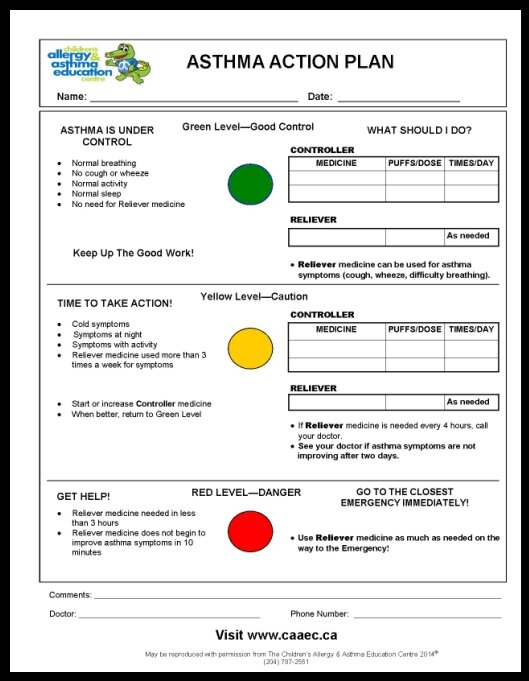
  • Work with your doctor to complete a written Asthma Action Plan. It tells you what to do when your asthma is under control and what to do when you have asthma problems.

  • Work with an asthma educator to learn more about controlling asthma. Contact your Lung Association to find one in your area.

  • Know your asthma triggers and stay away from them.

  • Know what your asthma medicines do and learn how to use them correctly.


Asthma Facts

  • Asthma is an increasing problem.

  • 10-15% of Canadian children have asthma.

  • Asthma may be different for each person.

  • 75% of children who have asthma also have allergies.

  • Asthma can develop at any age, but is most common in childhood.

  • Children with asthma can lead normal lives.

  • Asthma is present even when symptoms are few or absent.

  • Asthma symptoms may seem better in teen years, but can return later in life.


With care and determination, asthma can be controlled.


© 2001, 2004 The Children's Asthma Education Centre. No part of this document may be copied (either mechanically or electronically), altered or stored on any mechanical or electronic database without the prior written consent of The Children's Asthma Education Centre, a non-profit educational resource. This pamphlet is for information only and is not meant to replace physician advice.